
Why Broadway?
From bags to protective wrap, we’ve got you covered.
Broadway Industries is your partner for high quality, innovative solutions and expertise in product and goods protection for moving, storage, retail or during transit.
Learn MoreNeed help selecting the right paper bag?
by Jaime Radakovich | Posted in: Bags

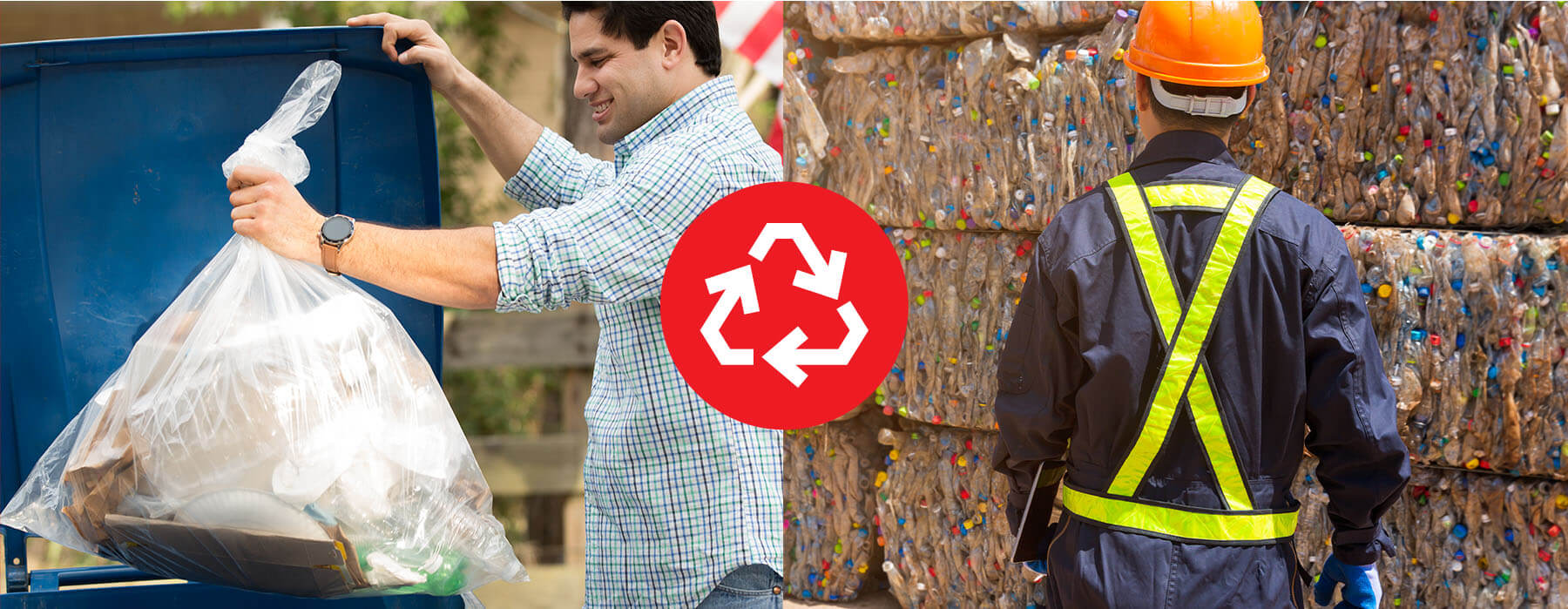
Sustainability has many definitions, labels, and requirements in today’s world. It can be difficult for a business to stay current and discern what suits its needs, customers, and the environment.
Recently, there has been an increase in post-industrial and post-consumer recycled content used in manufacturing. Both types of recycled content are available in various materials, from plastic and paper to cans and clothing. Using recycled content in products diverts waste from landfills, conserves natural resources, lowers carbon emissions, saves energy, and promotes the circular economy. Purchasing recycled content products for your business helps align your brand with eco-conscious consumers’ needs while stimulating further innovation in the waste reduction market. However, as a business owner, there are other things to consider, like product function, quality, customer satisfaction and cost. Is all recycled content the same, and which is best suited for your business?
In this blog, we will examine two of the most popular types of recycled material: post-industrial and post-consumer. Both post-consumer and post-industrial recycled content can be found in all types of products and materials, from plastic to paper to cans to clothing. The major difference between these two types of content is where the material is sourced. Let’s take a closer look.

Post-industrial recycled content (PIR) is also known as pre-consumer recycled content (PCC). This type of recycled content comes from the excess trim, scraps, or defective products collected during the initial manufacturing process.
PIR/PCC never reaches consumers before being recycled. Instead, it stays within the manufacturing facility and is reworked or sold off to make additional products.
Some argue that PIR is technically not recycled waste because it does not go through the “recycling process” and believe manufacturers will use the excess scraps from production runs regardless because they have monetary value. However, PIR/PCC retains a higher purity level due to the controlled environment in which waste is captured, making it an excellent candidate for products requiring high levels of regulation. In the end, others contend that any waste diverted from a landfill that serves a purpose seems like a win for sustainability.
+ PIR/PCC is more readily available
+ Higher purity level of content due to a controlled environment
+ Popular for products requiring high levels of control
Broadway offers Recycled-Content Mattress Bags, Covers, and Liners. Same great quality with less environmental impact.

PCR, or post-consumer recycled content, comes from the waste consumers recycle. Discarded products (e.g., glass, plastic, paper, aluminum) are diverted from landfills and collected through established recycling programs. The materials are reprocessed (shredded, melted, etc.), becoming raw materials available to create new products.
PCR sources vary based on the local waste stream and are more prone to contamination due to product use and collection. Additional treatment like sorting and cleaning is sometimes necessary to ensure quality. However, using PCR ranks high for sustainability not only because its source comes from consumed products. Its collection process creates sustainable consumer behavior and a market for recycled items, resulting in economic benefits like job creation and keeping recycling on shore. Several states have passed laws requiring a minimum percentage of PCR in certain products.
+ PCR meets state regulatory compliance
+ PCR is critical to the circular economy due to the ability to encourage sustainable behavior, create market demand for recycled content, create jobs, and keep recycling on shore
+ PCR uses end-of-life products that consumers recycle
Broadway’s Re-Use-A-BagTM line features kraft bags that are 100% recyclable, 100% reusable and made from a minimum of 40% post-consumer recycled content.
Sometimes, a product will not specify what type of content it contains. “Recycled Content” is a catch-all phrase and can mean one or a combination of pre- and post-consumer recycled content.
Usually, if a product has a percentage of post-consumer recycled content (PCR), it is specified somewhere. PCR is known for its environmental impact and is a product and packaging requirement in some states. Even though the term recycled content (RC) lacks transparency, it still contributes to some waste diversion. It is important to note that a ” recyclable ” product is not necessarily made from recycled materials.
+ Contributes to diverting some waste from a landfill

As we have seen, PCR and PIR/PCC share many of the same benefits, most notably diverting waste from landfills. So which one is more sustainable? PCR is the front runner as it is critical to the circular economy and involves products recycled by the public.
Some states have passed legislation requiring post-consumer content (vs. pre-consumer recycled content). However, pre-consumer recycled content still holds an essential role in this space.
Despite manufacturers’ efforts to utilize their excess waste, approximately 7.6 billion tons of industrial solid waste is generated and disposed of in American industrial facilities each year. (1)
The answer lies in the intended use and requirements for the product. Products made from recycled content will only achieve true sustainability if they are also of comparable quality to their virgin counterparts. Creating a poor-quality item out of recycled content to state sustainability is not beneficial. The content itself is not the only factor to consider.
As the world becomes more eco-conscious and states pass legislation, market demand increases, driving innovation. New Jersey recently passed a law requiring manufacturers to meet minimum recycled content requirements for regulated containers and packaging products sold or offered for sale in New Jersey.
California is looking to amend its plastic bag ban to require paper bags (not exempt) to be made from 100% post-consumer recycled content. Many other states and municipalities nationwide have already started to require the use of PCR content in products sold.
As manufacturers and business owners, we know it is critical to supply customers with economical, sustainable products that don’t sacrifice quality. Here at Broadway, we constantly look for better ways to improve our processes and products to reshape the market without sacrificing quality. We source our supplies from ethical companies. All our recycled content is certified and tested. Our paper suppliers hold FSC/SCF certifications, and our inks are food- and recycle-safe.
Choosing products made with pre- or post-recycled content is a step in the right direction. If you are looking for recycled content products for your business, contact us. We offer a full line of post-consumer recycled content paper bags through our Re-Use-A-BagTM line and recycled content moving and storage products.
Sources:
(1) https://www.epa.gov/sites/default/files/2016-03/documents/industrial-waste-guide.pdf
Tell us what you’re looking for and an expert will follow up to determine how Broadway can meet your needs.
From bags to protective wrap, we’ve got you covered.
Broadway Industries is your partner for high quality, innovative solutions and expertise in product and goods protection for moving, storage, retail or during transit.
Learn More